
Worn Shredder Knives: When to Rotate, Regrind, Replace or Inspect the Rotor
Start with the cutting edge and the surface that supports it. If the knife is worn and its mounting position still meets the machine maker's requirements, the knife may be eligible for rotation, regrinding or replacement. If the knife has shifted, the holder is distorted or the rotor mounting surface is damaged, inspect the assembly before approving a parts order.
Document the wear before deciding what to buy
With the machine isolated under the site's energy-control procedure, record the affected rotor positions, the condition of the counter-knives and any recent impact, jam or fastener failure. Photograph each knife and the contact surfaces under it. Wear spread across several positions may point to a different cause from repeated damage at a single position. Treat the pattern as a clue and check it against the machine's inspection procedure.
Use the service manual or a written OEM instruction to identify the allowable cutting edges, minimum knife dimensions, permitted regrind geometry and required cutting clearance. Check the applicable parts revision against the machine serial number and rotor configuration.
Choose the least extensive repair that restores the cutting geometry
| Decision | What supports it |
|---|---|
| Rotate or index the knife | The knife is designed with another usable edge. The knife body, seat and fasteners meet the reuse criteria and the new orientation can achieve the specified clearance. |
| Regrind the knife | The OEM or approved drawing allows regrinding. Restoring the edge leaves the knife within the permitted dimensions and geometry, with the required clearance achievable after installation. |
| Replace the knife | The knife fails the reuse or regrind criteria, and inspection confirms that its seat, holder and rotor mounting position remain serviceable. |
| Replace the holder and specified hardware | Inspection locates the damage in a replaceable holder. The rotor interface meets the OEM's inspection criteria and the replacement parts match the installed configuration. |
| Escalate for rotor inspection | A holder cannot seat correctly, rotor-side threads or mounting surfaces are damaged, cracking is suspected, or a position repeatedly loses clearance after correct assembly. Obtain a machine-specific repair disposition before returning the machine to service. |
Know when a holder job becomes a rotor job
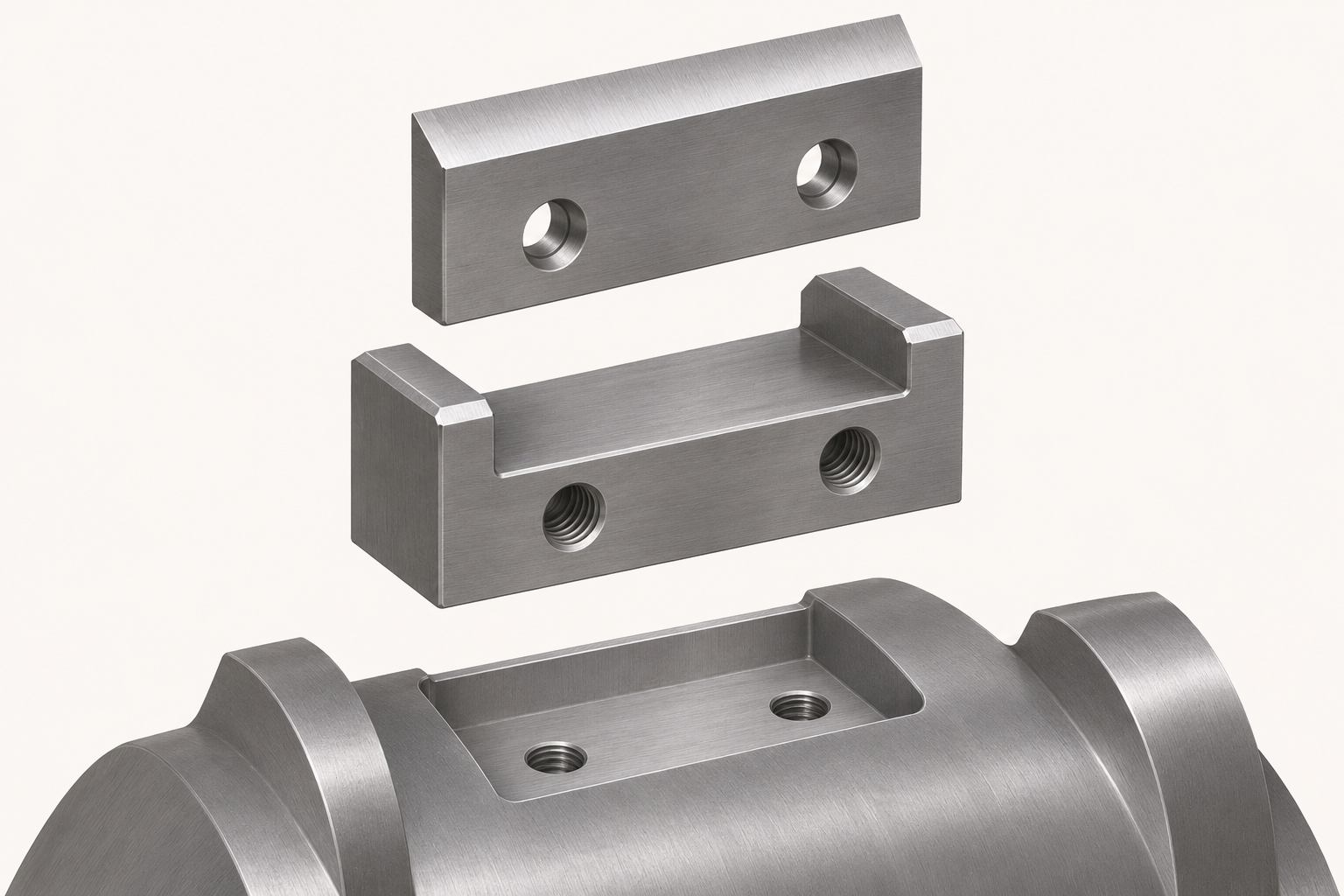
Check the knife-to-holder contact and the holder-to-rotor interface separately. A damaged holder may be replaceable by itself. If the rotor can no longer locate or retain the holder within specification, send the OEM or qualified service provider photographs, inspection readings, the machine serial number and rotor revision. Ask for the inspection criteria and repair scope in writing. These determine whether the job calls for a holder kit, rotor refurbishment or rotor replacement.
Lindner describes screw-on knife holders for its Komet and Komet-HP series and a rotor upgrade path during reconditioning. This is an example of a service option that depends on rotor design. Confirm eligibility and parts for the specific machine before budgeting a retrofit.
Get quotes against the inspection findings
Request separate scopes for knife service, holder and hardware replacement, and rotor work when more than one route is viable. Ask who will verify seating, fasteners and cutting clearance under the OEM procedure before restart. Record the baseline clearance at the affected positions and retain the measurements with the work order so the next inspection can identify recurring movement or wear.
Sources
Lindner Komet and Komet-HP knife-holder concept
Krumar shredder blade technical reference
Reddit r/Tools discussion that prompted the maintenance question